
Inflows into foreign currency non-resident (bank), or FCNR (B), deposits have significantly underperformed market expectations, leading to a more than 1 per cent depreciation of the rupee against the dollar this week. Analysts point to fading RBI support measures, tepid interest due to rising global bond yields, and narrowing interest rate spreads compared to 2013 as key challenges.

Indian benchmark indices Sensex and Nifty rebounded on Wednesday, driven by value buying in banking stocks and select heavyweight counters, with the Sensex climbing 332.63 points and the Nifty ending above 23,200.

Indian benchmark indices Sensex and Nifty recovered early losses to trade higher, supported by encouraging developments on the geopolitical front, specifically the US-Iran peace deal, and easing crude oil prices.

CAD, which is the difference between outflow and inflow of foreign currency, touched a historic high of 6.7 per cent in the third quarter.

A potential US-Iran peace deal, expected to be signed on June 19, is anticipated to ease geopolitical stress and benefit various sectors, particularly in India, with analysts suggesting investors await finer details before making significant moves.

According to a RBS report, 'the impact on India's current account deficit should be significant, cumulatively amounting to 1.9 per cent of GDP' provided for the full year FY14 prices for both oil and gold remain at current levels and aggregate volume gold demand remains stable.

Saudi Arabia's steep cut in LPG benchmark prices has pushed India's household LPG underrecoveries to their lowest level in over two years, slashing oil companies' losses from Rs 200-250 per cylinder last year to about Rs 20-40 now.

Russia on Thursday said it was not bothered at a possible price cap on its crude oil proposed by the West, saying Moscow will negotiate directly with its partners like India and China as the price should be decided between the producers and consumers, and "not someone who just decided to punish someone." Members of the G7 have agreed to impose a price cap on Russian oil in a bid to hit Moscow's ability to finance the war in Ukraine. Countries want to reach an agreement ahead of December 5, when Europe's embargo on Russian crude travelling by sea takes effect.

Indian benchmark indices Sensex and Nifty rebounded in early trade, tracking a recovery in global equity markets and an easing of hostilities between Israel and Iran, after a sharp fall in the previous session.

Iran has strongly rejected former US President Donald Trump's assertion that the Strait of Hormuz is 'NEW U.S. TERRITORY', with top officials warning that his 'delusions' would be 'corrected' and highlighting the gap between Washington's claims and its actual influence over the strategic waterway.

'Rather than deploying all their money at once, investors should invest gradually.' 'A staggered approach is the better strategy because volatility is likely to persist.'

Markets face risk of a prolonged bear phase as oil shocks and geopolitical tensions test inflation, growth and investor confidence globally, points out Debashis Basu.

The Indian rupee weakened against the US dollar due to geopolitical tensions surrounding the Strait of Hormuz and ahead of the Reserve Bank of India's monetary policy review.

Indian benchmark stock indices, Sensex and Nifty, recorded their fourth consecutive day of declines, driven by selling in FMCG, financial, and auto sectors. The downturn is attributed to fresh tensions in the Middle East, uncertainty surrounding the US-Iran 60-day ceasefire, and elevated crude oil prices.

Indian benchmark equity indices, the BSE Sensex and NSE Nifty, experienced a significant drop in early trade due to elevated oil prices, weak global market trends, and renewed fears of military operations in the Middle East following US President Donald Trump's statements regarding Iran. Track Sensex, Nifty on May 20.

Analysts are revising down India Inc's financial year 2026-27 (FY27) earnings growth forecasts, citing persistently high crude oil prices above $100 a barrel due to the West Asia conflict, which is expected to dent corporate financial performance in the coming quarters.

The government has reduced the tariff value for import of edible oil, including palm oil, by up to $112 per tonne, a move which experts said can lead to lower domestic prices. The Central Board of Indirect Taxes and Customs (CBIC), through a notification, has cut the tariff import value of crude palm oil by $86 per tonne, and of RBD and crude palmolein by $112 per tonne each. It also reduced the base import price of crude soyabean oil by $37 per tonne. The changes in tariff value of edible oil are effective from Thursday (June 17).

'Regulations give a particular minimum amount of shares to be given in the OFS or IPO -- without which one cannot do the IPO.' 'We got that number on the day of filing of updated DRHP -- sufficient for us to go live with the IPO.'

India's Petroleum Minister Mani Shankar Aiyar has predicted that the 'oil bubble' will burst soon.\n\n

Former Haryana Chief Minister Bhupinder Singh Hooda has criticised the newly introduced fees on UPI payments, stating they will lead to increased inflation for the common man. He dismissed government claims that customers would not be burdened, arguing that merchants would pass on the costs. Hooda demanded the immediate withdrawal of these fees, highlighting that the government's move contradicts its 'Digital India' initiative.

Oil marketing companies (OMCs), paint manufacturers, tyre producers, and aviation stocks witnessed significant gains as Brent crude oil prices slipped below $70 per barrel. The price drop came after a double blow: The US imposed tariffs on Canada and Mexico, including energy imports, and OPEC+ - the group of major oil-producing nations including Russia - announced an output increase of 138,000 barrels per day, the first such hike since 2022.

'The real shock is going to be from a deficient monsoon.'

Maruti Suzuki, India's leading passenger vehicle manufacturer, is experiencing robust growth in the June quarter, driven by a recovery in the entry-level segment, easing supply constraints, and significant market share gains. Despite potential headwinds from El Nio, analysts remain optimistic about the company's future performance.
The Indian rupee is highly vulnerable among Asian currencies, with Barclays and MUFG warning of a potential depreciation towards 100/$ if the West Asia conflict persists, driven by widening current account deficits and elevated crude oil prices.

Foreign exchange reserves of the oil producers have increased by $1.1 trillion over the past decade.

The US has informed allies it will avoid new military strikes on Iran, instead focusing on economic sanctions and maritime enforcement, particularly in the Strait of Hormuz. This strategic shift aims to intensify pressure on Tehran's economy and oil exports while keeping the military option open if Iran initiates aggression. Diplomatic efforts continue amidst persistent regional tensions and maritime incidents.

Indian stock markets experienced a significant sell-off, with the Sensex tumbling over 1,300 points, driven by escalating crude oil prices due to US-Iran tensions and Prime Minister Narendra Modi's call for austerity measures, which amplified investor concerns about India's economic outlook.

Reliance Industries Ltd reported a 22 per cent year-on-year decline in consolidated net profit for the June quarter, primarily because the previous year's earnings were inflated by a one-time gain from the sale of its stake in Asian Paints.

US President Donald Trump stated that Iran is eager to make a deal and predicted a sharp decline in oil prices due to abundant supply, amidst a Senate resolution to limit his war powers in Iran.

The rupee weakened to a record low against the US dollar due to Gulf tensions, rising oil prices, and foreign capital outflows.

Come December, India may have to re-evaluate purchases of Russian oil if a price cap on crude oil proposed by the US and the European Union (EU) comes into effect. That impacts nearly a quarter of India's oil purchases that come at a discount, helping limit marketing losses for India's state refiners and enabling New Delhi to manage inflation by freezing pump prices of motor fuels. In September, India imported 1 million barrels a day or 24 per cent of its overall imports from Russia, which became the biggest supplier of oil to India.

The current trend in crude oil prices gives cause for much concern and if this persists, many of the calculations indicating further recovery and improved growth for the economy can be nullified.

Demand has fallen significantly in the US, which accounts for around 30 per cent of crude oil consumption and meets 60 per cent of its demand through imports.

Moody's Analytics predicts India will remain the fastest-growing major economy in 2026 and 2027, but its pace will moderate due to a global slowdown, geopolitical risks, and financial market volatility, despite the boost from AI demand.

US crude was down 25 cents at $52.08.

Insights from behavioural economics suggest that an ambitious nudge can be effective if three conditions are met, points out Ram Singh Insights from behavioural economics suggest that an ambitious nudge can be effective if three conditions are met, points out Ram Singh, director, Delhi School of Economics.
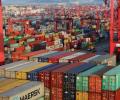
India's trade deficit reached a six-month high of $31.98 billion in July, driven by a sharp increase in imports, particularly crude oil, electronic goods, coal, and fertilisers. Both merchandise exports and imports recorded their second-highest levels during the same period.

IT stocks had their worst first half fall in decades, with the Nifty IT index declining 31% in the January-June 2026 period, its biggest decline in the first six months of a calendar year since 2003.

Indian markets on Dalal Street rallied sharply as easing tensions in the US-Iran conflict and stable oil prices boosted sentiment. Track Nifty 50 and BSE Sensex performance and key global triggers.

Monthly gold imports have declined to 25-30 tonnes from 70-80 tonnes while recycling of old jewellery has increased following the recent hike in import duties.
